
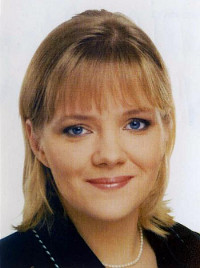
We are proud to present our exclusive interview with the head of the Estonian census 2011, Diana Beltadze.
Please tell our readers, what are the basic results of the Estonian Census in regards to ethnic makeup?
Preliminary census data was published by the Estonian Statistics Department in August-September, 2012, but it is not yet final.
For now we can say that absolute numbers have fallen, both of Estonians and Russian residents of Estonia - by 27 and 24 thousand respectively in comparison with 2000 census. Though during this time, the percent of the population that is Estonian has grown by 1.8 percent.
The largest ethnic groups have become Estonians, Russians, Ukrainians, and Belarusians. After that comes Finns and Tatars. The number of Finns in Estonia has grown to more than 7400 people.
What other ethnicity statistics have come out of the census?
The 2011 census allowed Estonians to indicate their native language. We publish official data if the number of native speakers is higher than 100 people. Yes, of course, there are also small groups. For example, there are only four Livonians in Estonia.
A person's nationality and native language don't necessarily coincide. For example, the census counted 326 thousand Russians in Estonia, but more Russophones. We are seeing the tendency among representatives of peoples of the former USSR who are native speakers of Slavic languages switching over to Russian in family life or to some other language; in Estonia only a small amount of them change over to Estonian.
While in the 2000 census, we counted 109 languages in Estonia, this time we counted 157.
Also, Estonia differs from other governments in that our census asks about the respondent's religious affiliation. This is important, for example in the area around Lake Peipus, where there live Russian Old Believers, who came to this area before Peter the Great.
According to 2011 census data, adherents to a concrete religion number 320,827 people, or 29 percent of the population older than 15 years old. In comparison with the 2000 census, this number has not changed much.
The most popular religions have become Russian Orthodoxy, representing 16 percent of the population and Lutheranism, which covers 10 percent of people older than 15.
Is there data on the number of Russian Finno-Ugric people with permanent residence in Estonia?
Their number is not large, and has fallen in comparison with the last census. So, there were 234 Mari in Estonia, but only 116 of them are fluent in Mari, the rest of them speak either Estonian or Russian. Udmurts numbered 189, there were 93 Komi, and Mordvins [traditional exoethnonym for the Moksha and Erzya. – editor' note] came to 416 people, though we aren't sure how many of these speak their native languages. We're preparing to analyze this data compared to pre-existing census data, beginning with 1959. At the time of the census, there were 354 Karelians, and 357 Ingrian Finns living in Estonia.
One other thing that bears mentioning is that there are more women than men among Finno-Ugrics in Estonia. Age groups 50 and over dominate there as well.
It can also be said that in the most recent census, for the first time Finno-Ugrics were bold enough to indicate their own national identity and native language- in the past they were more likely to indicate that they were Russians.
Estonian itself has jargons and dialects, which some activists even call independent languages. Has a clear picture of this subject emerged?
This is actually the first census where we collected data on Estonian dialects, and people, by the way, were very glad to give information on them. As it turned out, around 11 percent of Estonophones know some kind of jargon, dialect or subdialect of Estonian.
The largest of the dialects is Võro, which is spoken by more than 87 thousand people, though that is further divided into the subdialect Setu, which is spoken by 12 thousand people. In general, South Estonian and Island dialects exhibit more differentiation than North Estonian ones.
The census data make it hard to say where the speakers of these dialects are concentrated, because the respondents were spread across the country. Here, I think it is best to be guided by the specific linguistic studies, made back in the 19th and beginning of the 20th Centuries, though the most recent such study on areal distribution of Estonian dialects was made in 2005. Field studies on dialects and jargons were made in the Soviet times.
A part of the Estonian population permanently lives and works abroad - were these people included in the Census?
This is a very delicate issue: the census rules clearly state that data on a person must be collected, if they live permanently in Estonia, or have been living in the country for at least a year. We also counted people who work in other countries, but nonetheless spend their free time in Estonia with their families. We also took data on those who are temporarily living in Estonia, which is more than 5 thousand people. But there were Estonians who had been living abroad for a long time, for example in Great Britain, who wanted to be registered in the census, as they explained, to make the total number of Estonians larger. However, they couldn't be counted because in reality, they don't have a permanent residence in Estonia. We were counting the permanent population of the country, not all Estonians worldwide.
Conducting a census of the Estonian people would be something altogether different. For example, it would be quite easy to get a count of permanent resident Estonians in Finland- they're counted upon registration. But getting such data from other countries is not so easy.
Perhaps, and this isn't a question for you, but has the Estonian government made any conclusions from the recent census?
Right now, Estonian demographers and politicians are thinking: what can we do to make life on the fringes of the country more comfortable? People prefer to live in the center of civilization, and not on the fringe, such as in South Estonia.
And something must be done about the problem of an aging population.
In neighboring Finland, you see more and more Asian and African emigrants. Would Estonia not be threatened by an influx of new migrants whose ethnic and cultural characteristics are very different from the mentality of Estonians themselves, and other local population groups?
I think we won't have the problem of a large number of Asian and African migrants, because our immigration quotas are very strict, just like they were 10 years ago. Though at present, there are talks on whether we should be raising these quotas. A year ago, there was a scandal when some civil servants received a bribe to file a visa permit. But it was over the fact that this is unethical, and quotas were left unchanged. For now we won't be developing a new immigration policy, everything will remain as before.
Of course, anything can happen. This year, for example, in South Estonia, border guards stopped a microbus with illegal Vietnamese immigrants, but they were sent back, and not held in some refugee camp with the prospect of eventually receiving permanent residence.
Foreigners can get into the country by marriage. For example, Chinese students can come here to study, have a family, and get naturalized in this way.
Perhaps this is happening in other countries, but at present it is not a threat to us. The amount of foreigners who have received a permanent residence permit in Estonia by marriage with locals is very small. The number of Chinese speakers, for example hasn't even risen above 100- there are around 90, while 10 years ago there were only 15.
In accordance with sociological studies from the University of Tartu, women in our country are more likely to find a man abroad, outside Estonia, while men will take any woman as long as they are in Estonia itself, say, by marrying a Ukrainian here. But this has still not brought about any meaningful changes in terms of demographics.