
The Moscow enthusiast of researching and creation of textbooks about Finno-Ugric languages, a professional physician Vitaly Cherniavsky prepares for publishing the unique work – the full grammar of the language which is disappeared and known only from annals of the Murom nationality.
The Muroms lived along the downstream of Oka river and they seemed to become a part of Russian nation after the distribution of the Orthodoxy and of the ancient Russian language in times of Vladimir- and –Syzdal, Moscow principalities. As V. Cherniavsky said to the informational centre FINUGRO, the grammar of the Murom language will be more carefully reconstructed that the academic Orest Tkachenko did for the Mari language (of the more numerous Finish nationality, which lived near the Muroms). V. Cherniavsky used for reconstruction the toponomy of the region, the facts of northern and northern-west dialects of the Erza language, of western dialects of The Morsh language, of the Mari language because the presenters of ancient Muroma contacted with all these linguistic communities. The author will complete the grammar-book with the Murom-Russian and the Russian-Murom dictionaries.
V. Cherniavsky hopes to finish the manuscript to the end of October – the beginning of November. He used the Roman alphabet for the reconstruction as well as for preparing of the text-book about the Vod language. According to his opinion the phonetic system of the Finno-Ugric languages contains the sounds which have no analogs in the Russian language, which is served by Cyrillic alphabet.
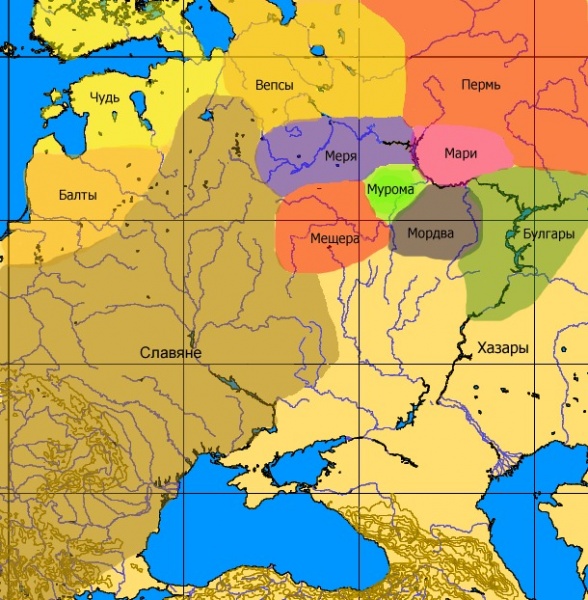
As the author of the grammar wrote, “the Finno-Ugric tribe Muroma lived on the territory of present Middle width of Russia, in the watershed of Oka 5 hundred years ago. They occupied the space which was bounded: in the north by the river Klyazma, in the west- by the river Sydoga, in the east – by the Oka river, in the south – by the effluent of the Unzha river. The neighbors of the Muroms were Finno-Ugric nations of the Meri, the Mereschi and the Erza. The territory of the Murom was an important part of Volga trading way in the Early Middle Ages. It was, as some historians say, “the Finno-Ugric Luxembourg”. On the territory of the Murom were not only their own trading places, but also of the Meri, the Mereschi, the Erza, the Moksha and the Mari.
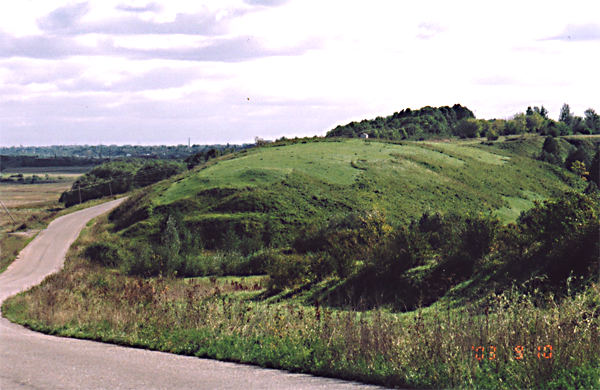
The most popular idea is that the Murom language was maximally close to the Erza language. The Murom toponymy and waternames are saved in names of territories, of localities, rivers and lakes in the area of Modern Sydog, Selivanovsk and Murom territories of Vladimir district. There was a few information about the Muroms in first Kiev-Byzantine annals. The Murom archeological monuments: the burial grounds, villages and Chaadaev town are kept.
The Muroms were excellent farmers and herdsmen, hunters and fish men, they traded very actively with all neighbors. The facts for this are work instruments, the objects of mode of life, the figgery, the tings of foreign origin as the spearheads and money, which were founded in Murom’s houses and burial places.
The military objects as spearheads, arrowheads, axes reached high European quality of the manufacturing and combat characteristics. This fact (in opinion of some scientists) tells that the soviet historian’s version of the peaceful assimilation of the Muroms by the Slavs is minimally implausible. In fact, it tells about either military opposition or contract conditions of suzerain with Kiev, later with Chernigov and Vladimir-Merski, about the integration of the Murom nationality in the political system of Easter Europe. The second variant seems to be more convincing.
In a hall the economy of the Muroms was on a high level because of the advantageous geographic location of the Murom. In the V-VII centuries the Muroms (as historians and archeologists say) were if a day trendsetters for the world of Volga regions Finish.
The Balto-Slavic nomands appeared in these lands in X-XI centuries and were, in fact, assimilated by native population of the region. Step by step the mixed Slavic-Finish settlements and burials appeared. To the end of XII century the Muroms were not mentioned in the annals as a single nation.