
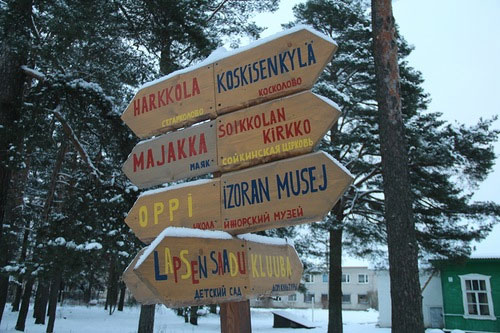
 Media Center FINUGOR presents an essay of Irina Smirnova, activist, author of “Mari every day” project, member of the board of Youth Association of Finno-Ugric Peoples, member of the Baltic Assembly of Finno-Ugric Youth, devoted to the problem of the carbamide plant intended construction in the village of Vistino, Kingisepp District of the Leningrad Oblast of the Russian Federation, and to preservation of the Izhorians, small indigenous Finno-Ugric people.
Let us recall that ICT group of companies intends to build a first-class hazard plant in Vistino in addition to the already built coal and sulphur terminals and oil storage. One-kilometer protection zone determined by the applicable laws nearly reaches the houses. The residents’ questions concerning the danger of man-made disasters in the enterprise, of the possibility of ammonia odor in the village and the purity of drinking water, which is taken from the Belaya River, remain unanswered. ICT wants to resettle the village residents (about 2000 people) to another location. The residents do not want to leave their homes and have already prepared a letter to Vladimir Putin, President of Russian Federation.
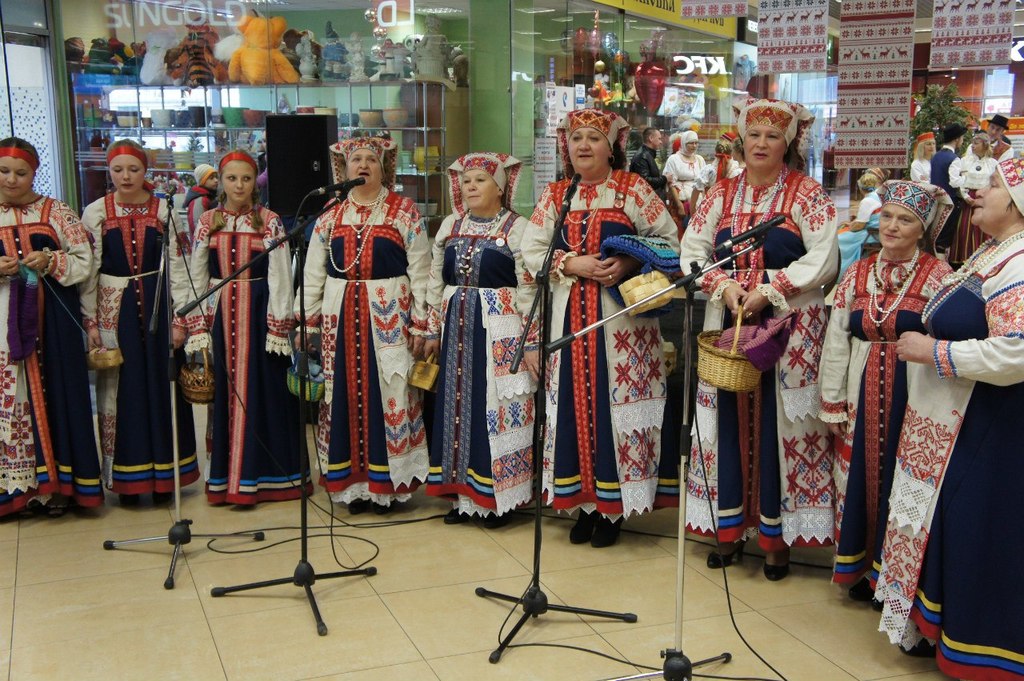
The Izhorian community, indigenous ethnic group in the territory, has sent the relevant application to the governor of the Leningrad Oblast, Commissioner for Human Rights, RF Presidential Envoy to the Northwestern Federal District and Regional Public Chamber. They refer to Federal Law Article No. 82, dated 30 April 1999, guaranteeing the rights of indigenous peoples of the country for protection of their primordial living environment, traditional way of life, trades and crafts.
Now the Soikinsky Peninsula, where active industrial development is carried out, is inhabited by about 300 Izhorians who, together with regularly visiting relatives, make 85 percent of all Izhorians.
* * *
In early November 2013 there appeared a wave of mass media articles, which reported that the Soikinsky peninsula residents take a stand against the carbamide plant construction near their houses. Today this issue is particularly acute and urgent.
I consider it necessary on behalf of representative of the Youth Association of Finno-Ugric Peoples in the St. Petersburg region and the Leningrad Oblast and on behalf of the Baltic Assembly of Finno-Ugric Youth to speak out for the preservation of territories of the indigenous people Izhorians, namely MO (Municipal Unit) “Rural settlement of Vistino”.
Coastal zone of the Kingisepp district, in the businessmen’s opinion, perfectly serves as the most convenient and commercially viable territory for trade. This is the closest trade border with Europe for the whole of Russia. Such attractive places for big business are worth committing crimes and starting wars with the indigenous population. Everything looks like a script for a successful film, the only trouble is that it threatens to destroy an entire indigenous people.
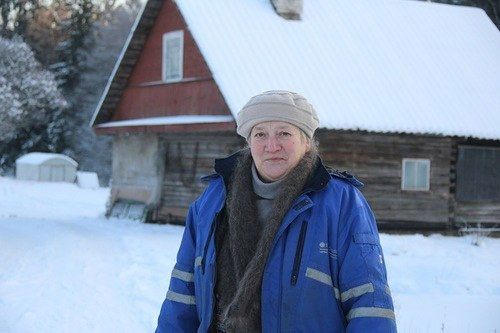
The Izhorians, the Votes, the Vepsians, the Ingrian Finns, the Karelians of the Leningrad Oblast belong to the Finno-Ugric language group. These are indigenous peoples of the Leningrad Oblast whose existence only few are aware of. The whole history of the Russian state is connected with these peoples, which affected their population. These small nations have the great past behind them and the great present of our country. We should treat them carefully and cherish their existence on their ancestral land.
I want to ask the Government of the Leningrad Oblast: who deals with issues of indigenous peoples in the region today? Take a look at this problem through the eyes of ordinary people, and not through the eyes of the regional budget.
This locality as the native Izhorian residence place is unique, and in the future it must compete for the title of “Finno-Ugric Capital of Culture” organized by the Youth Association of Finno-Ugric peoples.