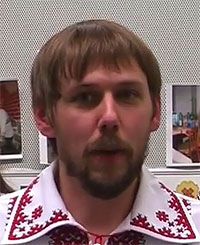
Media center FINUGOR presents an interview of Jeremy Bradley, researcher and teacher of the Finno-Ugric languages from UniversityofWien, citizen of theUSA. J. Bradley speaks Finnish, Estonian, and Mari languages, he developed a program for spelling check of the Mari language, he created a program-helper in reading for the Mari language learning, he participated in creating the Mari language course book in English, launched the web page Mari-language.com, which was later transformed into Mari Web Project, and he takes part in project for development of the English-Mari dictionary.
In his interview (the complete version may be found in Russian) Finno-Ugric specialist form Wien shares his outlook upon the destiny of minor languages. According to J. Bradley, many minor languages have already disappeared or are in danger of disappearance, being under pressure of “major” languages, for example, English; yet there are some fortunate examples of survival of minor linguistic societies in foreign-speaking surroundings.
Jeremy, is that possible to prevent minor Finno-Ugric languages form disappearance? Professor Janos Pusztai has declared the border of 100 thousand native speakers necessary for preservation of languages – to what extent may this supposition be considered grounded?
First of all, I would like to remark that I am not an expert in languages survival, but my first impression is that it is too simplified – to state some certain number speaking of such things. “If there are more of you – your language will survive, if not – then it won’t”. Probably, Janos Pusztai himself understands that he simplifies the situation.
One excellent example to contradict the belief that minor languages shall a priori die out, - the Tatars in Finland, who keep on to preserve the constant number of native speakers – about 1000 people, - after more than 100 years of living in the country. Tendencies and conditions of language functioning are much more important than bare figures.
But on the whole I think there are much better chances for change of tendencies for those Finno-Ugric languages, which Janos Pusztai named ‘major’. I believe that I, being a linguist, can do nothing to save the Mansi language, for example. But when I think of the Mari, Komi, Udmurt, Erzya languages, I can come up with some precedent cases in history, when languages were saved from dying out, even being in danger of disappearance. A good example for that is the Welsh language inGreat Britain.
Annika Pasanen related to the readers of Media center FINUGOR on the experience of preservation the minor Inari-Sami language in Finland.
Sami languages inFinlandare an excellent example! Not only the Northern Sami language has survived, but also the Inari Sami language and it is spoken by as few as 300 people!
However inRussiait seems much more difficult to do the same, because the attitude towards bilingualism is different. Many people in this country still think that bilingualism is something unhealthy, which only bothers the child and stands in the way. Quite the opposite is inFinland: it is normal to be bilingual there. InFinlandit is, on the contrary, unusual, if you do not speak three or more languages. What is more, lack of finance, official support, political circumstances… It takes much more effort and wit to put to life the same inRussia, than in other countries. But I can’t say that it is completely impossible. Nobody can prove that Russian is too major a language, and thus, minor languages can’t survive – I hear such statements from Mari people: “How possibly can the Mari language be preserved if Russian is much more important for living?” But if you takeGreat Britain, it’s just a couple of hours away fromLondon– and you will come across a living minor language, although English prevails everywhere!
Do you mean Cornish in Cornwall?
No, Welsh inWales. This language is a good example in a sense that the Welsh language revival took place without great political disturbances. It was a very smooth process. One hundred years ago children were punished at schools when they were heard to speak Welsh. For centuries the English used to cruelly eradiate Welsh fromWales. But today the attitude towards it has completely changed: the Welsh language is now regarded as cultural heritage ofGreat Britain, situation with it has stabilized.
Some Finno-Ugric languages are that small, that they seem to lose all the chances for preservation- such are the languages of the Vod and Izhora in Russia, the Livonians in Latvia, the Kvens in the north of Scandinavia. Is it possible to hope for their saving by means of the “language nest” – or is it already too late?
As far as the Livonian language is concerned, it is probably indeed too late. However big the political will for its saving may be; and it is big. Supposedly, one of the factors is that the Livonian language is extremely difficult for learning, and it quickly demotivates enthusiasts, who are not the Livonians by origin.
I think, the Kven language has good chances for survival, but native speakers themselves are concerned with its unavoidable closing to the Finnish language –it comes to that that the Kven language is losing its characteristic features. My colleague inFinlandhas conducted field researches among the Kvens. She told me that her informants were always upset and disappointed to know that the words of their language which they always considered unique appear to exist in Finnish as well. In this sense the Kvens are more afraid not of assimilation from the part of the Norwegians, but “slipping down” to Finnish.
The Kven language is very close to Finnish, but, possible, it is not only about linguistics, but also about presence of traditional culture (the Kvens can be reindeer breeders as well as the Sami), ethnic self-comprehension.
Indeed, it is cultural identity rather than linguistic differences between the Finns and the Kvens. The Kven language does not differ from Finnish more than the Finnish dialects do. But the Kvens have their own history, own cultural identity, which they want to preserve.
I think, however, that such situations occur extremely rarely. For example, the Austrians have a very strong national identity and their own set of dialects. If two Austrians start talking to each other, the German fromGermanywill not understand a word, unless the conversationalists themselves want it. But inAustriathere are no movements for acknowledgement of the Austrian language being separate from German. No one denies the German language as the literary norm. There is only a tendency to use more openly in letters certain lexical items, which are called “Austricism”. The Austrians have come to consensus concerning preservation of their cultural identity inside the big German-speaking world.
If we come back to the Kvens, their situation somehow resembles the situation with minor languages inRussia. InRussia, and it troubles me, often inside the ethnos itself there is disagreement, reminding of a motto “Divide and Rule”. The example of the Hill Mari language comes to my mind: sometimes attempts of development of the Meadow Mari language are denied by the Hill Mari, because they are so troubled with their own original ethnic cultural heritage. On the one hand, I understand this, but on the other hand, the Meadow Mari language is not a threat for the Hill Mari language. I think approach for diglossia – bilingualism – is better than if there remained only one language. Diglossia is the best way to help in this situation. The Hill Mary language has more chances for survival inside broad general Mari surroundings rather than if it was just on its own. Norway and Switzerland are examples of the countries where completely different languages successfully exist without any language separatism: Swiss German and Norwegian Nynorsk steadily function, though their adapts are not willing to tear themselves away from dominating language – literary German or Norwegian Bokmål, accordingly.
Coming back to the topic of possibility of languages revival, I think, if there is someone mastering such language on the basis of written documents and audio records, it is quite possible to revive the language using the method of “language nest”. Fortunately, we, Finno-Ugric specialists do not intend to revive the dead languages, but only the languages in danger – and it is easier than for enthusiasts working inAmericaandAustralia, where the language landscape was destroyed to a greater extent.

Does the process of globalization and expansion of the English language constitute danger for “major” Finno-Ugric languages? The mentioned Janos Pusztai, Lari Kotilainen from Finland and some other experts in this country and Estonia tell that the English language drives out the national languages from the field of science; Anglicisms are borrowed for denotation of innovations, which is reflected in the vocabulary.
Danger in a sense of ways of development of these languages? Yes, maybe. Danger for their existence? No. I think these are still different things. The first one is inevitable and happens all the time. By the way, one Komi girl told me that the Russians mock at the Komi that there are a lot of words in the Komi language, borrowed from Russian. They say, you do not have your own Komi words standing for “biology” and “architecture”… whereas there is nothing Russian in these words, both the words came from the Greek language. But people do not know about the foreign influence upon their native language, if it happened in the past.
In history Latin, Greek, Arabian, French, German were the languages which made a great influence on all languages of the world. Now English plays this role. I do not think “globalization” is the right word for denotation of decay of minor languages on the planet. Indeed, it happens everywhere, but the process takes place locally, and it is to deal with by efforts of the interested parties locally.
Thank you for your answers!