
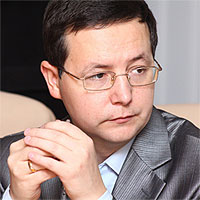
The FINUGOR Infocenter is proud to present the thoughts of PhD candidate in Philology, Aleksey Rassykhaev, who was president of the Youth Association of Finno-Ugric Peoples (MAFUN) from. The activist made note of problems, which must be overcome by the youth movement of Finno-Ugrics and MAFUN as a whole, and puts forward his vision for a way out of a situation that has been getting more and more difficult.
Mr. Rassykhaev’s article will be published on the eve of the XI Congress of MAFUN, which will be held August 5-7 in Helsinki. We remind our readers that activists of the Student’s Committee on Issues of Finno-Ugric Peoples of Helsinki University have called for a discussion on the modern condition and future of the Finno-Ugric movement on the eve of the XI MAFUN Congress.
* * *
I will not be at the upcoming MAFUN Congress. I’m sure the Komi youth at that forum will do a worthy job representing their Association member organizations. For the last two years since the previous Congress, I’ve tried to keep up on events going on both in the Association and surrounding it, even reading disputes and opinions on the Internet.
Like at previous MAFUN Congresses, in 2011 in Saransk, a new Board for the organization was chosen. This is a comforting fact for the youth Finno-Ugric movement, though one also can hear the opposite opinion. In questions of renewing the inner circle of MAFUN, we should not hurry and cast blame (on whom, I do not know) for the fact that “nothing is changing,” and the leadership is made up of “the very same people.” MAFUN must continue taking positions and making traditions. Of course, inactive people could end up on the Board, but they should keep to Regional Coordination centers. For that reason, you must put the blame on yourselves and your organizations, and not criticize the leadership of the Association. By the way, MAFUN Congress Regulations do describe a mechanism for changing Board members. And regional centers can also recommend a new Board member in serious circumstances.
Speaking of inner circles, this lamentable fact must be noted: in 2011 amendments were made to the MAFUN Charter, saying that a member of the Board can be elected more than two times in a row, and may also be older than 35 years old. These changes only harm the policy of attracting a young inner circle and attracting new members.
In the last two years, MAFUN has done a great job with two informational events – the project “Cultural Capital of the Finno-Ugric World,” and participation in sessions of the Permanent Forum of the UN. MAFUN’s new project for selecting the cultural capital of the Finno-Ugric world was interesting most of all for members of the association, but in no way was this so for the municipalities. If association members can only attract the attention of the leaders of villages and districts via personal connections, then they will not even want to participate. And that’s easy to understand: poor Russian municipalities are constantly on the search for money, and they don’t want to participate in contests that cannot provide financing. Nonetheless, you must prepare to continue this project in future years.
The main problem of MAFUN is that no one knows what it’s needed for and what young people need to do to cultivate their native languages. International organizations like MAFUN need to have a common language, both literally and figuratively, with which to consolidate efforts to accomplish the goals in the Association’s charter. In order to come to a common language, i.e. work out our own position on many facts, stick to them, create a like-minded team, no one need eat crow.
Another problem with the Association is the constant search for new activists. For national organizations in Russia, difficulties arise when active young people distract (attract) various parties, funds, fronts, and are lured by decent “dividends.” When people join parties and are subjected to party discipline, their social interests become less important, while social work is considered a burden and dangerous for work. The youth is trying to distance itself from social organizations, within which they once could develop their organizational and managerial abilities.
I expect the upcoming Congress to energize the youth of Hungary, Estonia and Finland, their active participation in MAFUN through associative organizations, and also a new MAFUN president from the Finnish party. Niko Partanen or Riku Savonen would do very well in this position. They are well known among Russian Finno-Ugric youth, and gregarious in terms of international relations. It’s a shame that there still isn’t information on appointments for candidacy for the post of Chairman of the Board. In accordance with point 7.11 of the MAFUN Charter, candidacies should be presented by the Congress holders no later than three months before the upcoming Congress.