
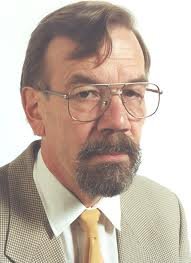
The media center FINUGOR presents an interview with associate professor and chair of the Uralic languages, University of Tartu, a member of the International Advisory Committee of the Finno-Ugric peoples of Estonia - Tõnu Seilenthal. In the interview, a prominent of Finno-Ugrian languages called for fundamental ability to save even not numerous languages.
In interview to the media center of FINUGOR Professor Janos Puzstai told that, in his opinion, there is a certain boundary of 100 thousand people speaking any language: if there are less carriers of language – it is doomed to disappearance, if it is more carriers – the language will survive. The question is very significant for Finno-Ugric languages many of which do not reach this number, but some of them count a few dozen of carriers – are there any prospects for not numerous languages?
In my opinion, Janos Puzstai is wrong. Where from is the number of 100 thousand instead of 80 thousand or, let's say, 120 thousand? The example of the revival the language Inari Saami shows that we can revitalize even the language of nation numbering only 300 people! This opportunity doesn't depend at all on ethnos quantity. The Estonians say, it is as if the bear saw a fly on the face of the man and wanted to kill it, but struck so strong that killed the man himself - in my opinion, Janos Pusztai also said too strong. Yes, it's true - the lower the number of native speakers - the harder it is to restore it, it will require more means, efforts, and so on. But you cannot assume that it is fatal.
The biggest mistake of Janos Pusztai is that these figures cannot be sounded. It will be bad if they are quoted: as if scientists have shown that a minimum threshold of survival language is 100 thousand language carriers, and based on it some decisions will be taken. It often happens that a scientist hypothesizes, but someone else refers to the publication or statement - as if it were a proven fact. And this is just a hypothesis, most notably in the humanities.
Janos Pusztai said that the language for the conservation and development needs a modern vocabulary, the developed national philology - how could small nations create all this for themselves?
Janos recognizes the fact that the language is full only if there are education and science on it. But in practice languages have different areas of use. I don't think that in language of Mansi it is possible to talk about nuclear physics, but about the things which are actual for Mansi themselves - inhabitants of settlements or the small cities – it is possible. You can teach arithmetic or natural study in elementary school - that's already good.
If to speak about not numerous Finno-Ugric languages, it is necessary to refer the Votic, Izhora and livsky languages to them. Whether is it possible to rescue from disappearance, say, the Votic language, if we will try to create certain ideal conditions for this purpose?
Yes, it is possible. If there was at least a small group of people who would like to do it. Let’s take, for example, the Livonian language: how many times it was spoken and written in the press – “the last Liv died”. But today there are about a hundred or more people who speak fluent Liwski - those who have learned the Livonian language in adulthood, but did not speak it in childhood.
The Liv’s activists have the site Livones.net where there are all the materials about the people and all the news about the Livonian language. Of course, it is not easy to take up the revival of the language, but when you wish - anything is possible.
Can linguists from Tartu University help in reviving the Votian language? How many people can speak Votian in Tartu?
In Tartu - five or six people. In St. Petersburg Mehmet Muslimov, a scientist from the Institute of Linguistic Studies of Russian Academy of Sciences, owns and teaches the Votian to all wishing people, he is also very good! Something is being done, in the village Krakolie of Leningrad region summer courses of the Votian language under the guidance of Heineken Heinsoo are held – it is visited by youngers and elderly people, not very big group, but they are concerned people. Janos Pusztai also expressed concern that the process of globalization and the English language ruling the world today - threaten even "great" Finno-Ugric languages such as Hungarian, Finnish, Estonian. We are talking about that the science and partly the higher education pass to English, borrowings get into the native languages from English.
The problem of globalization is that - if you wish your publication have been known in the world - they have to be published in English. Yes, we are already talking about the fact that we need to publish our results in the native language. But I'm not really afraid of anglicisms. Look, for example, the Russian language - it was strongly influenced by German and French languages, but now the words «sandwich», «schlagbaum», «endspiel» became native for Russian. Even earlier, a lot of lexicon got into Russian from Greek and Latin…
If you look at the Estonian language, we have a lot of German borrowings, but they become native during the time.
Of course, we must be vigilant: is it possible to say something in your own words, without the use of foreign words? Then, borrowing is not needed.
I have seen the opinion that, for example, the Komi language recently little changed under the influence of Russian language - and it is not about the vocabulary, because the post-Soviet era actively create neologisms to replace Russianisms, but about the fact that the grammatical structure of statements changes, approaching to the Russian language. Should we be concerned about this?
Everything changes with time. Otherwise we would be still speaking the general Finno-Ugric language. Any language is always in the process of change, and we should not be afraid of it. You just have to look ahead and decide - what is good and what is not.
Finns propagandize a technique of "a language nest" which they used for rescue of Inari Sami language. In some Russian regions such "nests" are also opened, but it isn't enough of them and it is not clearly, whether it is possible to rescue with such way not numerous Finno-Ugric and Samoyed languages … Is there any hope for the best?
Yes, "language nests" already work in Russia, it is not enough of them, but it is necessary to begin with something. The movement for revival of not numerous languages began in Australia and Canada where people undertook rescue of languages of aborigines. There is an experience of Wales, but I'm not aware of their projects. I am a cautious optimist and I always hope for the best, what I wish with all my heart to all not numerous languages!