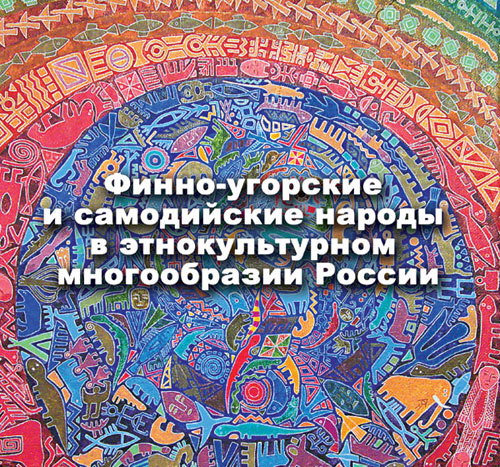
Presentation of the reference book “Finno-Ugric and Samoyedic Peoples in Ethnic Cultural Diversity of Russia” took place on December 24 in Syktyvkar. The presentation was organized in the Finno-Ugric Cultural Center of the Russian Federation, which arranged the publication.
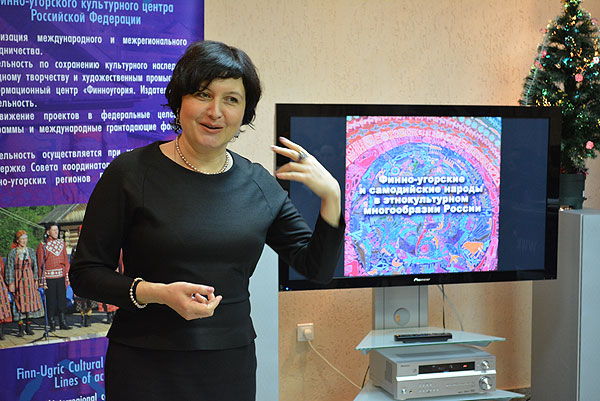
As it was clarified by Tatiana Barakhova, Director of FUKC (Finno-Ugric Cultural Center) of RF (Russian Federation) author and the project supervisor, the idea of composing a reference book appeared while developing information maps of regions of Russia – it was resolved to present information on peoples of the Uralic language family in a certain format.
 Partners in preparation of the publication were field-specific institutions and specialists in the regions, corrections and the final text were coordinated with them. T. Bakharova gave her special thanks to Oleg Ulyashov, ethnographist of the Komi Scientific Center, and Pavel Simpelev, journalist of the “Komi Mu” newspaper, for the professional advice in the reference book development.
Introductory article on the origin of the Finno-Ugric and Samoyedic peoples for the reference book was written by Irina Ilyina, ethnographist of KNC (Komi National Center).
There are 24 nations presented in the reference book: the Besermyans, the Hungarians, the Veps, the Vod, the Izhorians, the Ingrian Finns, the Karelians, the Kvens, the Komi, the Komi-Permyaks, the Livonians, the Mansi, the Mari, the Mordovians, the Nganasans, the Nenets, the Sami, the Selkups, the Seto, the Udmurts, the Finns, the Khanty, the Enets, the Estonians. The Mordovians are represented in the reference book as a united nation, because the corresponding article was prepared in Mordovia, (in Volga Center of Cultures of the Finno-Ugric Peoples), so the Moksha and Erzya are regarded as ethic subgroups of the Mordovians.
Despite that, in the article there are drawn some examples of differences in language, national clothes and other aspects of Moksha and Erzya culture, and at the end there are presented different variants of words and phrases in the short phrasebook. It’s worth reminding that activists of the national Erzya movement consider the use of the term “Mordva” incorrect as regards the closely related but still independent nations Moksha and Erzya. There are organized on the regular basis Congresses of the Erzya people and Erzya national ceremonial praying celebration “Rasken Ozks”, there are also effective independent Erzya organizations.
On the other hand, the publication includes the Kvens, although the Finnish authorities do not regard them as a separate nation, and the Kven language is considered a dialect of Finnish. But in this case the chapter about the Kvens was prepared by the members of FUKC of RF themselves on the basis of the Internet materials. In the article about the nation there are specified its inhabitance place, given historical ethnographical reference, information on religion, language, written language, traditional occupations, national cuisine, clothes, ornamental art, mythology, folklore, music, ceremonies, celebrations. There are also specified the names of the outstanding science and culture people, places of interest, and objects of the historical and cultural heritage. The chapter is finished with the short phrasebook: there are drawn up several phrases in this language and their translation into Russian.
The publication is filled with colorful illustrations; each chapter is decorated with the national ornament of the nation described. The reference book circulation amounts to 1000 copies.